



PRA3
Progressive retinal atrophy
| Name: | Progressive retinal atrophy (PRA3) |
|---|---|
| Gene Location: | FAM161A |
| Chromosome: | 10 |
| Mutation: | c.1758-15_1758-16ins238 |
| Symptom Complex: | Ophthalmic |
| Inheritance: | Autosomal recessive |
| Test type: | Direct mutation test |
| Typical onset age: | ~5 years~ |
Note: these information are only valid for Tibetan Terriers.
| General Information |
|---|
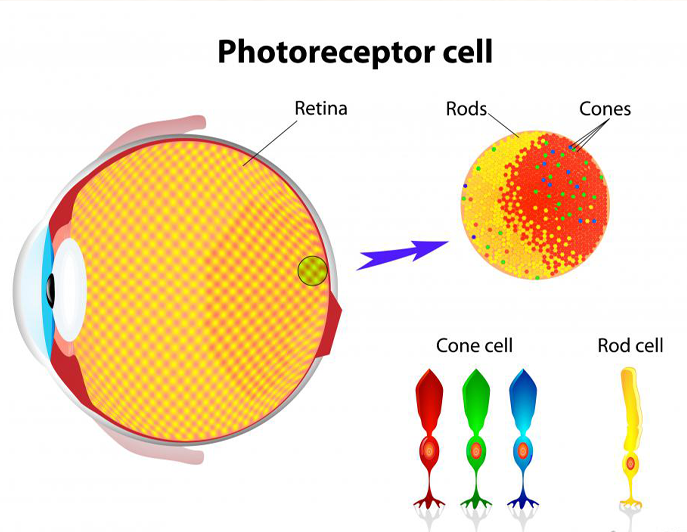
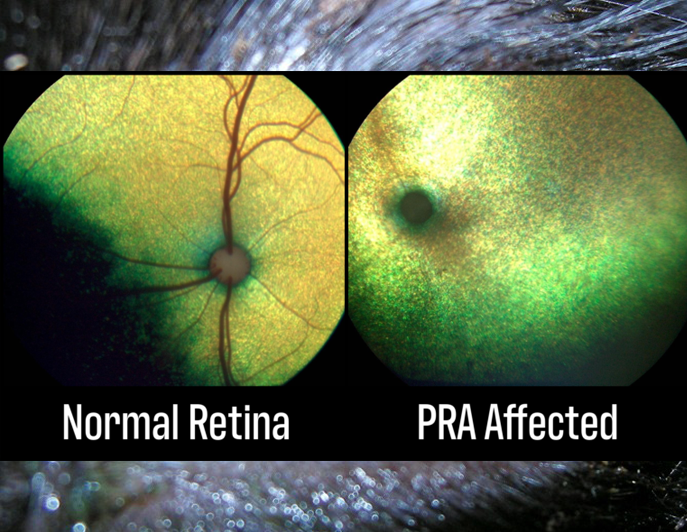
Canine progressive retinal atrophies (PRA) are genetically heterogeneous diseases characterized by retinal degeneration and subsequent blindness. While there are PRA mutations that are shared by multiple breeds, many seem to be private to a single breed or are found in breeds sharing similar ancestral backgrounds. Typical signs found by ophthalmoscopic examination are widespread tapetal hyper-reflectivity and retinal vascular attenuation. Genetic testing complements clinical eye examinations with the advantage of detecting known PRA mutations before breeding age or before clinical signs present. In Tibetan Terrier, a genetic variant of the FAM161A gene has been found to cause a PRA form which is called PRA3. The FAM161A gene encodes for a ciliary protein expressed at the photoreceptors of the retina. However, not all ophthalmological PRA-affected Tibetan Terriers could be explained by PRA3. Therefore, additional unknown PRA causing variants are suspected besides to the PRA3 & rcd4-PRA variants in Tibetan Terriers. |
| Clinical features |
|---|
Please note that symptoms and age-frames may also be of other types and may differ from those mentioned above. |
| Morbidity | |||
|---|---|---|---|
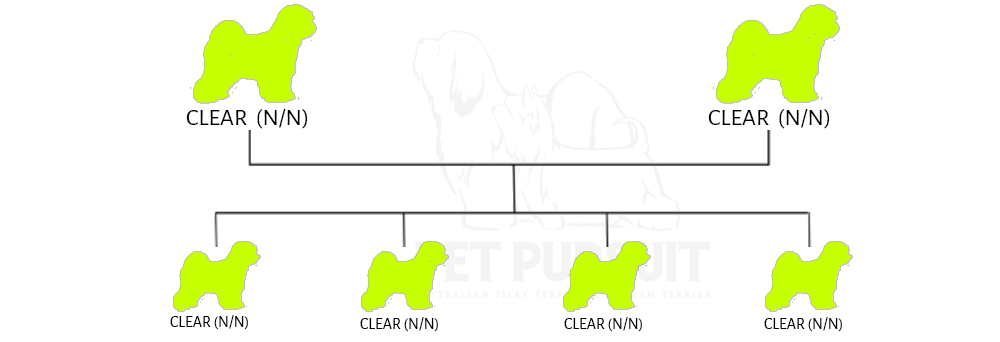
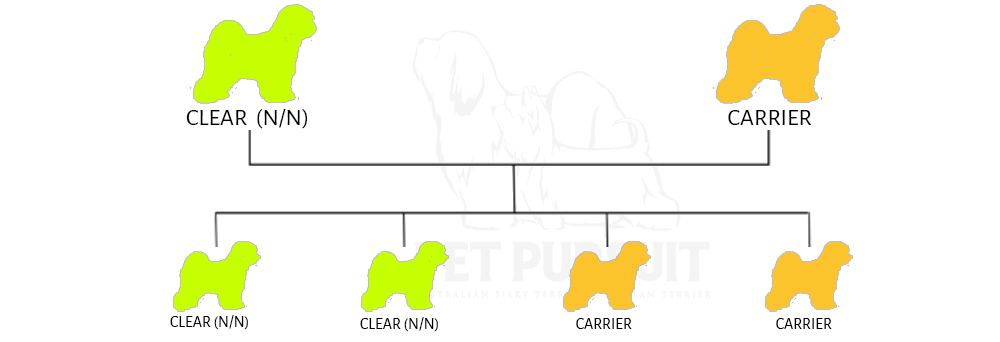
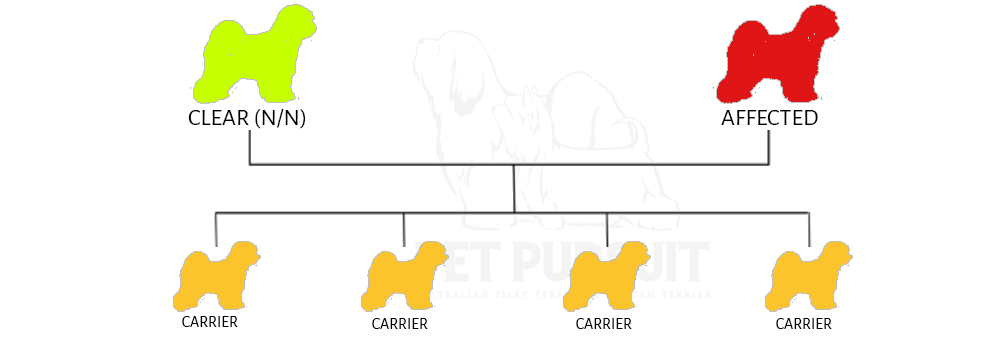
CLEAR / N/N  | CLEAR / N/N = Dogs with N/N genotype will not have this variant of PRA. If N/N dog is affected by PRA, it’s different PRA-gene or unknown mutation. | ||
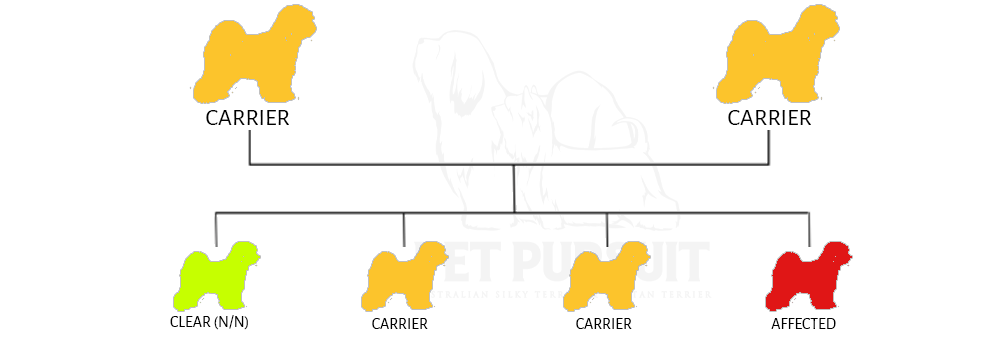
CARRIER / N/PRA3  | CARRIER / N/PRA3 = Dogs with N/PRA3 genotype are generally clinically healthy and do not develop the disease. If N/PRA3 dog is affected by PRA, it’s different PRA-gene or unknown mutation. | ||
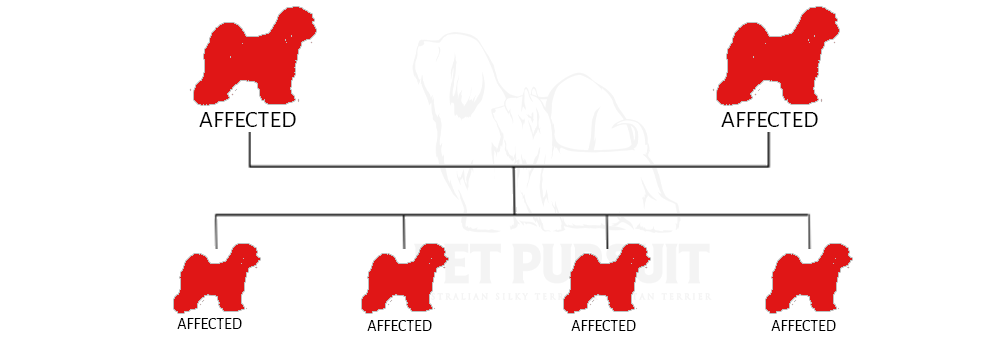
AFFECTED / PRA3/PRA3  | AFFECTED / PRA3/PRA3 = Dogs with PRA3/PRA3 dogs appear normal at birth, but begin to exhibit clinical effects later. Symptoms often appear between 2-11 years of age. The age of onset of the disease can vary greatly among individuals. | ||
| Inheritance | |
|---|---|
 |  |
 |  |
 | |
© Pet Pursuit (www.petpursuit.net). Any use, sharing (public or private) or display is forbidden.