



RCD4
Progressive retinal atrophy
| Name: | Progressive Retinal Atrophy (rcd4-PRA) |
|---|---|
| Gene Location: | PCARE |
| Chromosome: | 17 |
| Mutation: | c.3149_3150insC |
| Symptom Complex: | Ophthalmic |
| Inheritance: | Autosomal recessive |
| Test type: | Direct mutation test |
| Typical onset age: | ~10 years |
Note: these information are only valid for Tibetan Terriers.
| General Information | ||||
|---|---|---|---|---|
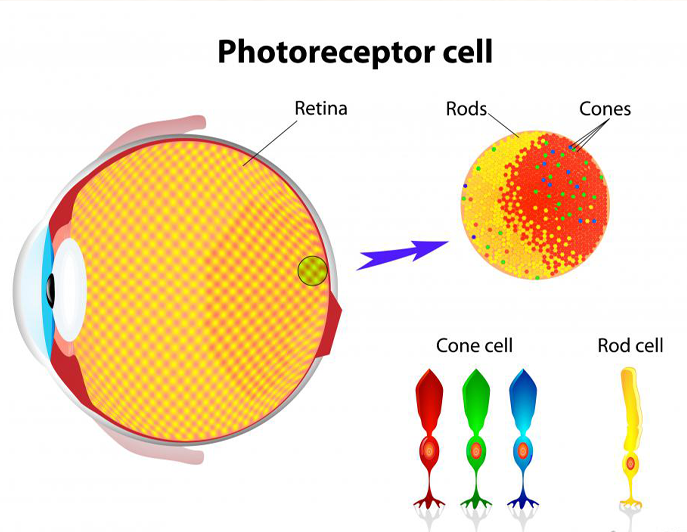
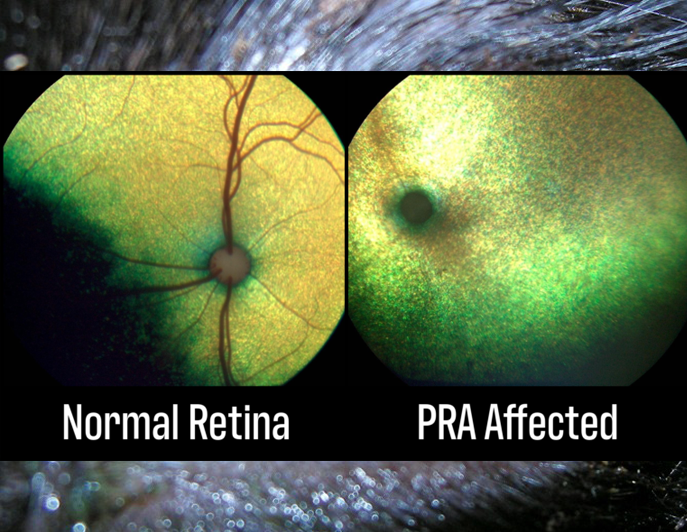
The Progressive Retinal Atrophy (PRA) leads to a degeneration of the retina and results in blindness. The Rod-cone-dysplasia type 4 (rcd4)-PRA is characterised as a Late Onset PRA (LOPRA). Night blindness is a typical first symptom of the disease. However, not all ophthalmological PRA-affected Tibetan Terriers could be explained by RCD4. Therefore, additional unknown PRA causing variants are suspected besides to the PRA3 & rcd4-PRA variants in Tibetan Terriers. | ||||
| Clinical features | ||||
|---|---|---|---|---|
Please note that symptoms and age-frames may also be of other types and may differ from those mentioned above. | ||||
| Morbidity | |||
|---|---|---|---|
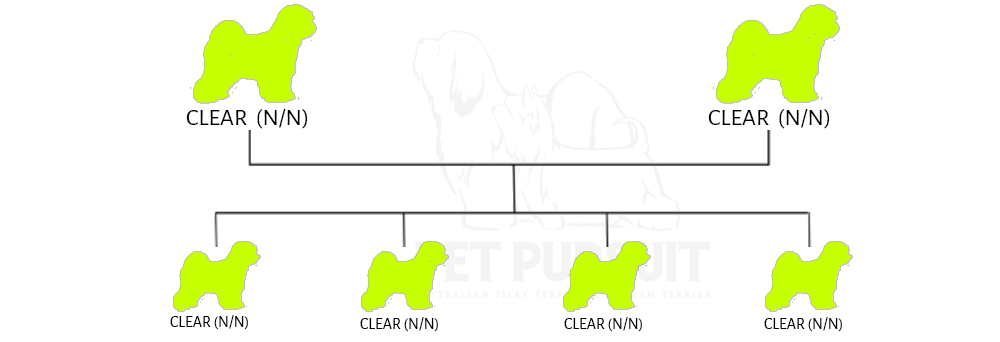
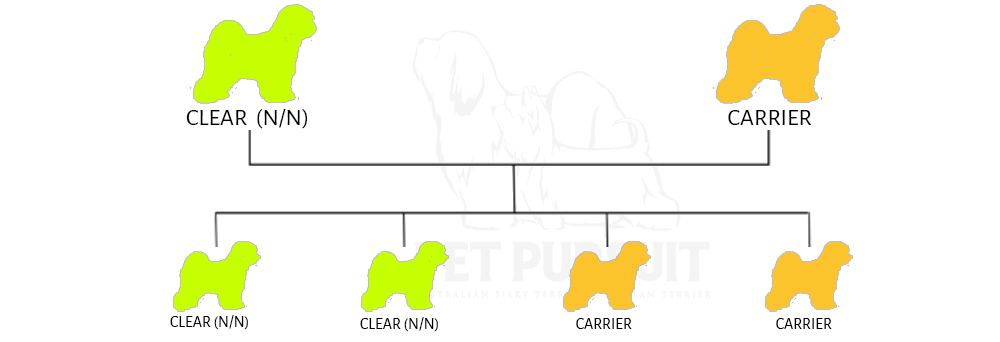
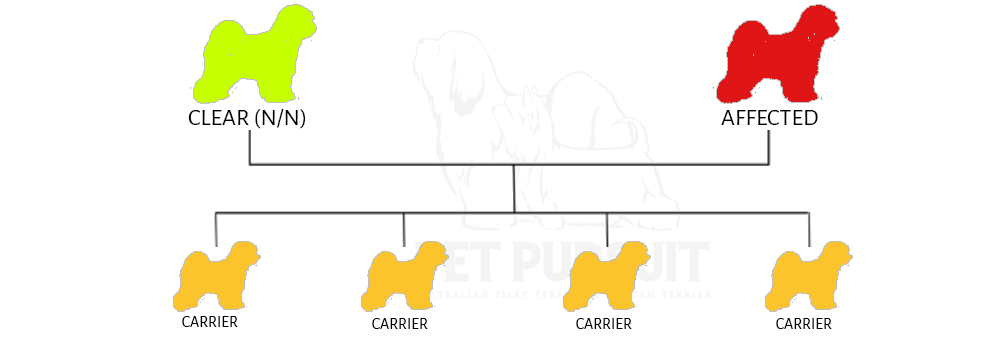
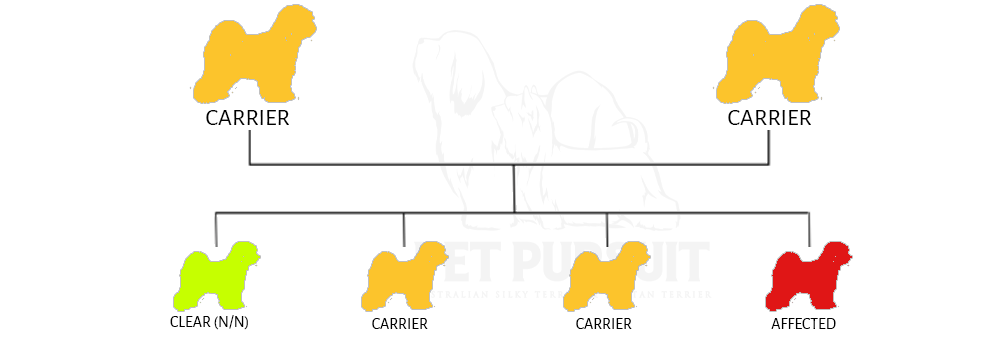
CLEAR / N/N  | CLEAR / N/N = Dogs with N/N genotype will not have this variant of PRA. If N/N dog is affected by PRA, it’s different PRA-gene or unknown mutation. | ||
CARRIER / N/RCD4  | CARRIER / N/RCD4 = Dogs with N/RCD4 genotype are generally clinically healthy and do not develop the disease. If N/RCD4 dog is affected by PRA, it’s different PRA-gene or unknown mutation. | ||
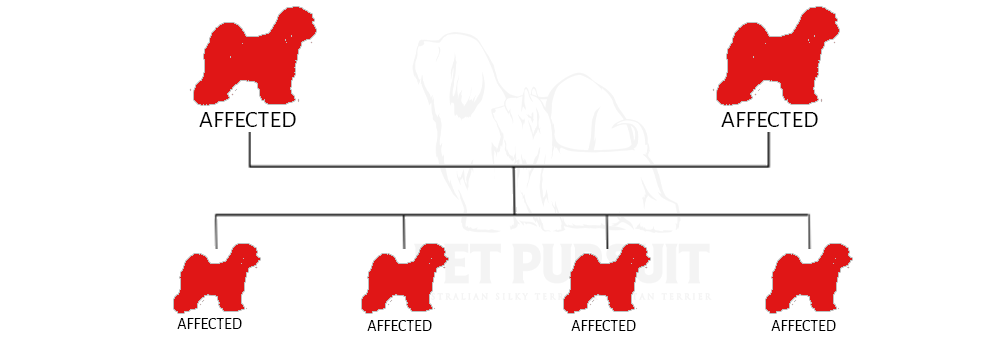
AFFECTED / RCD4/RCD4  | AFFECTED / RCD4/RCD4 = Dogs with RCD4/RCD4 dogs appear normal at birth, but begin to exhibit clinical effects later. Symptoms often appear between around 5-12 years of age. The age of onset of the disease can vary greatly among individuals. | ||
| Inheritance | |
|---|---|
 |  |
 |  |
 | |
© Pet Pursuit (www.petpursuit.net). Any use, sharing (public or private) or display is forbidden.