



NCL
Neuronal Ceroid Lipofuscinosis
| Name: | Neuronal Ceroid Lipofuscinosis 12 (NCL12) |
|---|---|
| Gene Location: | ATP13A2 |
| Chromosome: | 2 |
| Mutation: | c.1620delG |
| Symptom Complex: | Neurological |
| Inheritance: | Autosomal recessive |
| Test type: | Direct mutation test |
| Typical onset age: | ~6 years |
Note: these information are only valid for Tibetan Terriers.
| General Information | ||||
|---|---|---|---|---|
NCL is a neurodegenerative disease, caused by lysosomal storage dysfunction. The clinical course includes increasing levels of agitation and possible outbursts of aggression, hallucinations, hyperactivity and epileptic fits. Most animals lose their ability to coordinate everyday muscular activities. As the extent of neurodegeneration increases, all affected dogs develop psychological abnormalities and ataxia. | ||||
| Clinical features | ||||
|---|---|---|---|---|
Please note that symptoms and age-frames may also be of other types and may differ from those mentioned above. | ||||
| Morbidity | |||
|---|---|---|---|
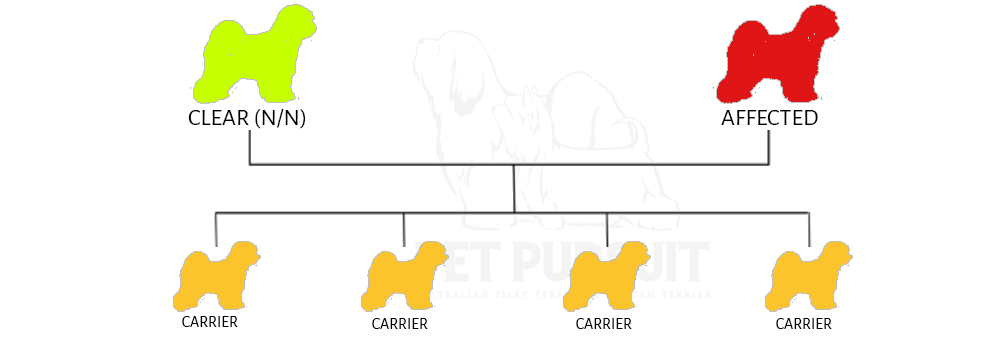
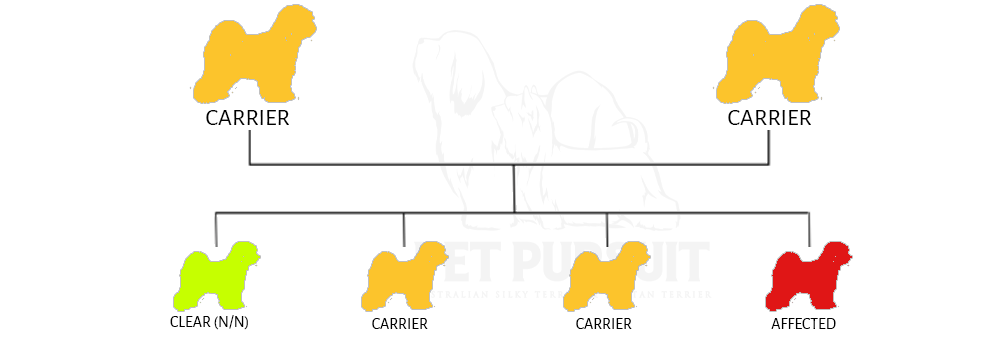
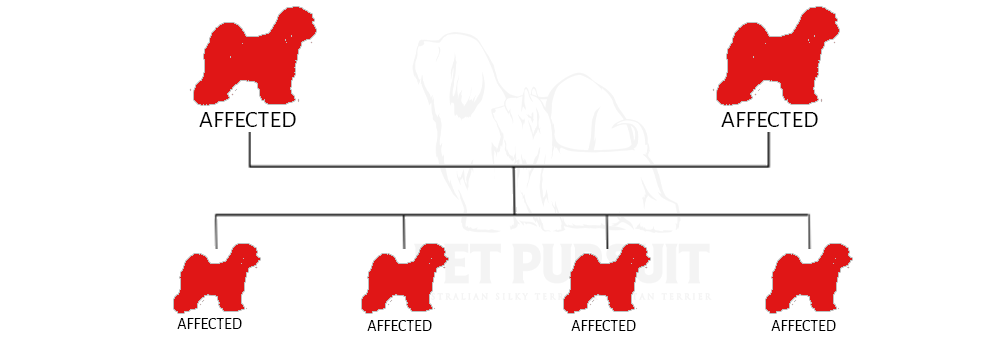
CLEAR / N/N  | CLEAR / N/N = Dogs with N/N genotype will not have this variant of primary lens luxation. In most cases heterozygous carriers are healthy. | ||
CARRIER / N/NCL  | CARRIER / N/NCL = Dogs with N/NCL genotype are generally clinically healthy and do not develop the disease. | ||
AFFECTED / NCL/NCL  | AFFECTED / NCL/NCL = Dogs with NCL/NCL dogs appear normal at birth, but begin to exhibit clinical effects later. Symptoms often appear between 4 and 6 years of age. These dogs usually die between 7 and 10 years of age. The age of onset and severity of the disease can vary greatly among individuals. | ||
| Inheritance | |
|---|---|
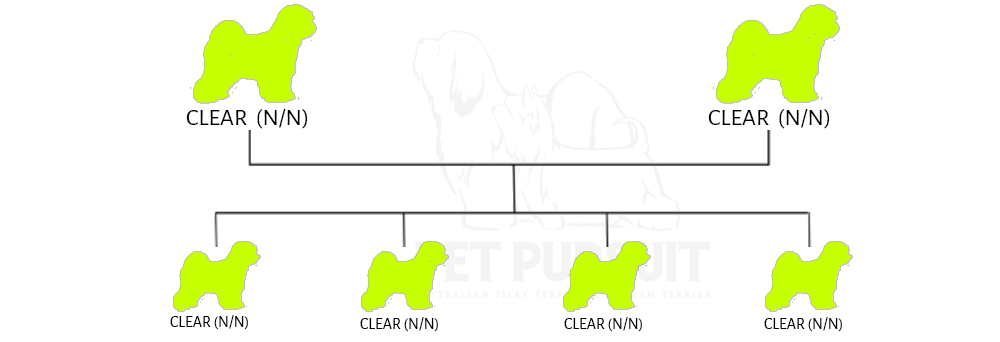 | 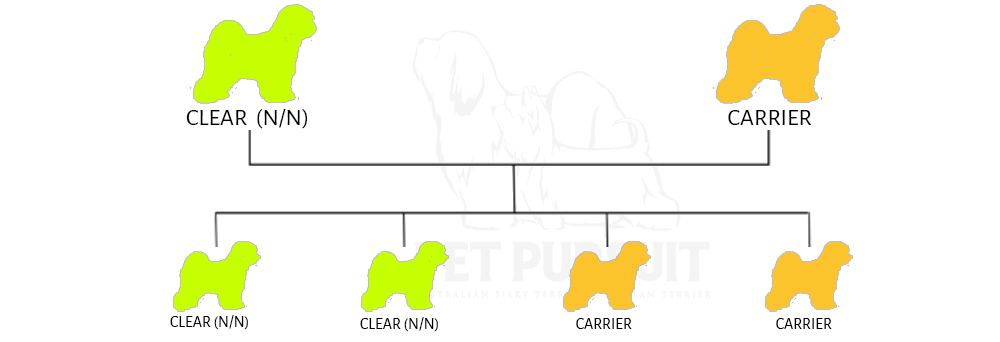 |
 |  |
 | |
© Pet Pursuit (www.petpursuit.net). Any use, sharing (public or private) or display is forbidden.