



DM
Degenerative myelopathy
| Name: | Degenerative myelopathy exon 2 (DM exon 2) |
|---|---|
| Gene Location: | SOD1 |
| Chromosome: | 31 |
| Mutation: | c.118G>A |
| Symptom Complex: | Neuromuscular |
| Inheritance: | Autosomal recessive, incomplete penetrance |
| Test type: | Direct mutation test |
| Typical onset age: | ~8 years |
Note: these information are only valid for Tibetan Terriers.
| General Information |
|---|
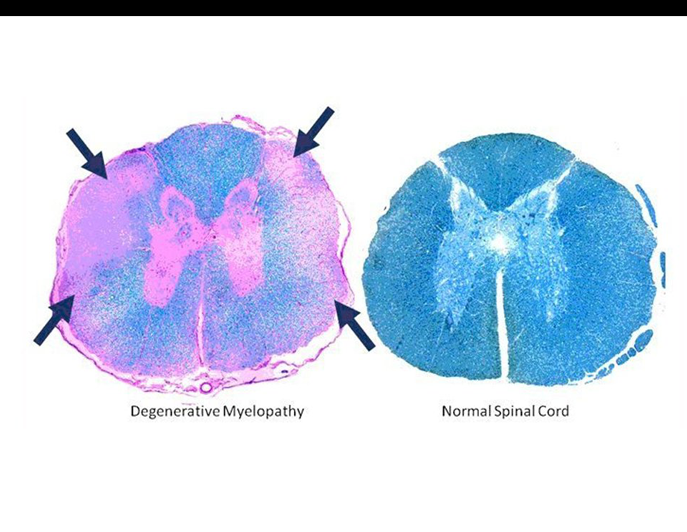
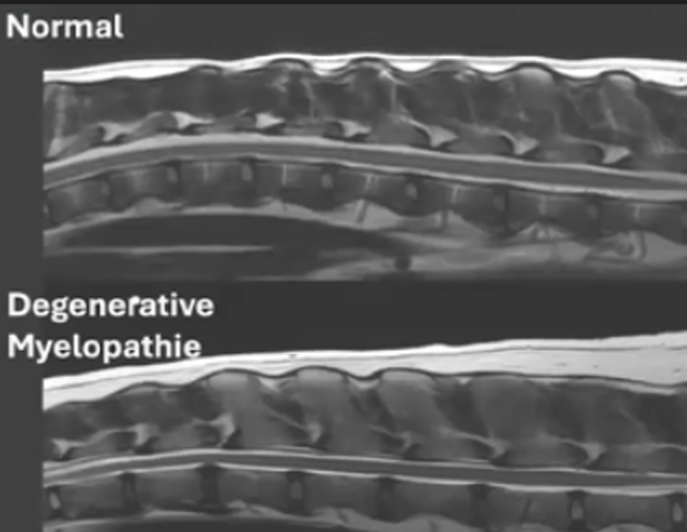
Degenerative Myelopathy (DM) in dogs is a serious, progressive, incurable neurological disease that affects the spinal cord, typically causing a slow, painless, and insidious decline in mobility. It typically begins at around 8 years of age. The first signs include weakness and coordination problems in the hind legs. As the disease progresses, the front legs may also be affected, potentially leading to paralysis and paraplegia of all limbs. Incontinence may also occur. It is often compared to Amyotrophic Lateral Sclerosis (ALS) in humans.
Degenerative myelopathy (DM) in dogs is frequently confused with or masked by the normal signs of old age. Because DM typically affects dogs older than 8 years - an age when arthritis, muscle loss, and general slowing down are common in many breeds (yet even 10-year-old TT is not old) - early symptoms are often attributed to "just getting old" or chronic orthopaedic issues like hip dysplasia or knee injuries. Therefore DM is likely to be very underdiagnosed in the breed.
DM is a slow-progressing, non-painful disease itself. The subtle onset makes it easy for owners to assume it is part of the normal aging process rather than a progressive disease. However, in long-lived breeds, it significantly shortens the dog's life expectancy and quality of life. Secondary diseases and injuries can be painful.
DM is autosomal recessive, butincomplete penetrance, meaning that not all dogs with the high-risk genetic marker (two copies of the SOD1 gene mutation, often labeled "DM/DM" or "Affected”) will develop clinical signs of the disease. While exact percentages are difficult to determine due to variation across breeds, a significant portion of affected dogs do not develop clinical symptoms, potentially because they do not live long enough or lack other required factors. There is ongoing research to identify other genetic factors that modify risk for DM in different breeds.
| Clinical features | ||||
|---|---|---|---|---|
Please note that symptoms and age-frames may also be of other types and may differ from those mentioned above. | ||||
| Morbidity | |||
|---|---|---|---|
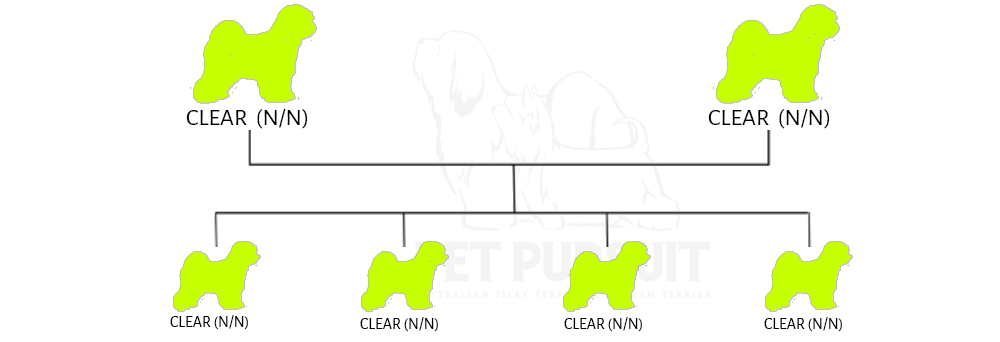
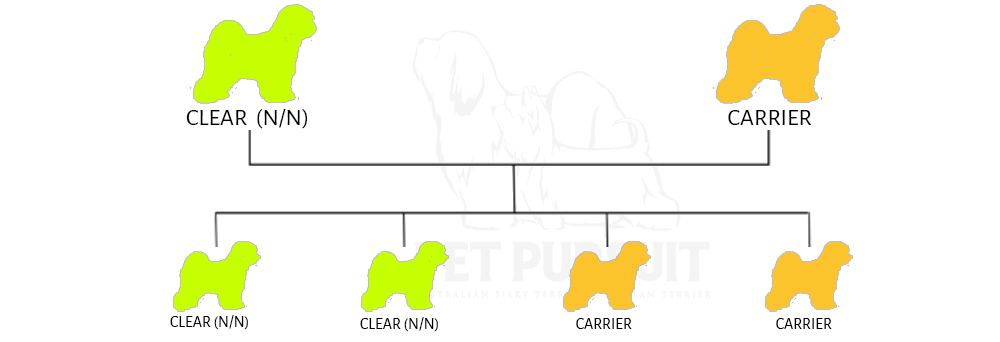
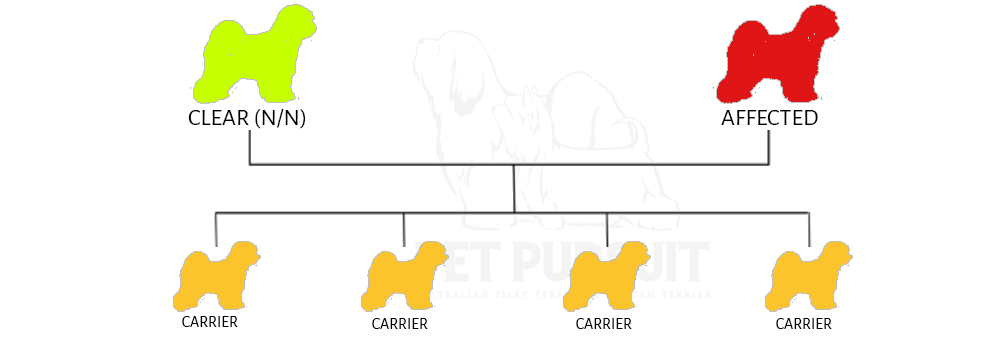
CLEAR / N/N  | CLEAR / N/N = Dogs with N/N genotype will not have this disease. | ||
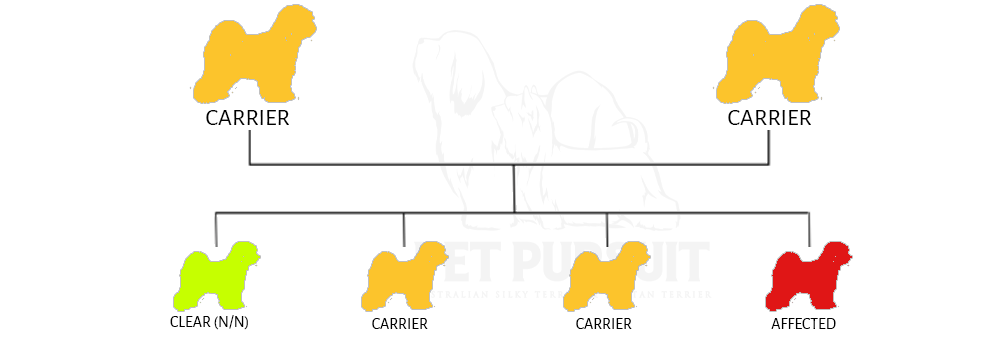
CARRIER / N/DM  | CARRIER / N/DM = Dogs with N/DM genotype are generally clinically healthy and do not develop the disease. | ||
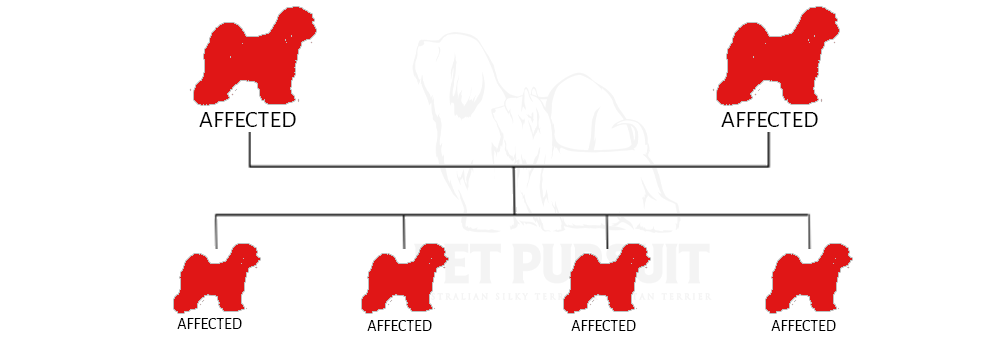
AFFECTED / DM/DM  | AFFECTED / DM/DM = Dogs with DM/DM confer increased risk for DM. However, it is important to understand that not all DM/DM dogs will develop the disease. It is generally believed that roughly 10% to 30% of at-risk dogs will go on to develop the disease in their lifetime, though some estimates indicate up to 40%. | ||
| Inheritance | |
|---|---|
 |  |
 |  |
 | |
© Pet Pursuit (www.petpursuit.net). Any use, sharing (public or private) or display is forbidden.