IVDD/CDDY
Chondodystrophy (CDDY)
| Name: | Chondrodystrophy (CDDY with IVDD Risk) |
| Gene Location: | FGF4 |
| Chromosome: | 12 |
| Mutation: | - |
| Symptom Complex: | Skeletal System |
| Inheritance: | Chondrodysplasia (CDPA): Autosomal dominant
Chondrodystrophy (CDDY): Autosomal dominant IVDD, semi-dominant for height |
| Test type: | Linkage test |
| Typical onset age: | - |
Note: these information are only valid for Tibetan Terriers.
| General Information |
NOTE THE CHROMOSOME 12!
CDDY/IVDD is the most difficult tests to explain. The test uses "linkage" because the mutation being tested is inherited alongside the disease, making the test a highly accurate marker (98-99% predictive) for the risk of developing IVDD.
We are actually talking about two different genetests, which are usually compound:
**CDDY = Chondrodystrophy (FGF4-12).**
Causative gene: FGF4 on chromosome 12.
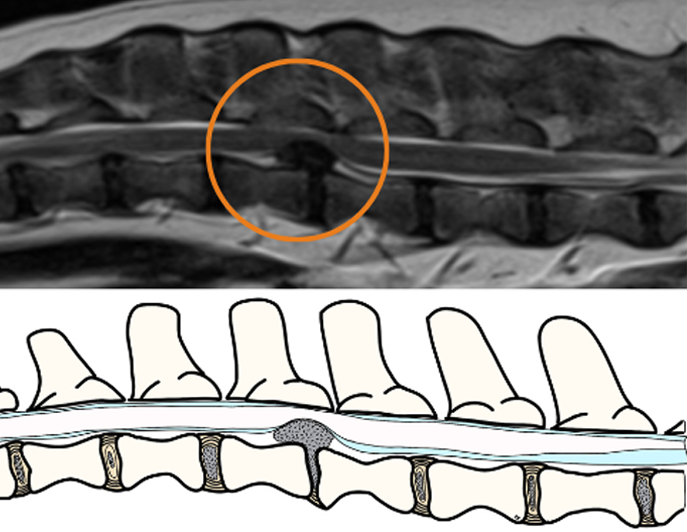
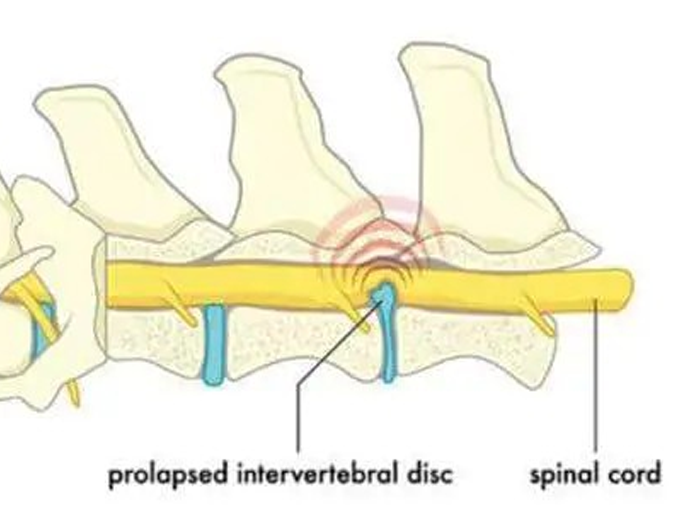
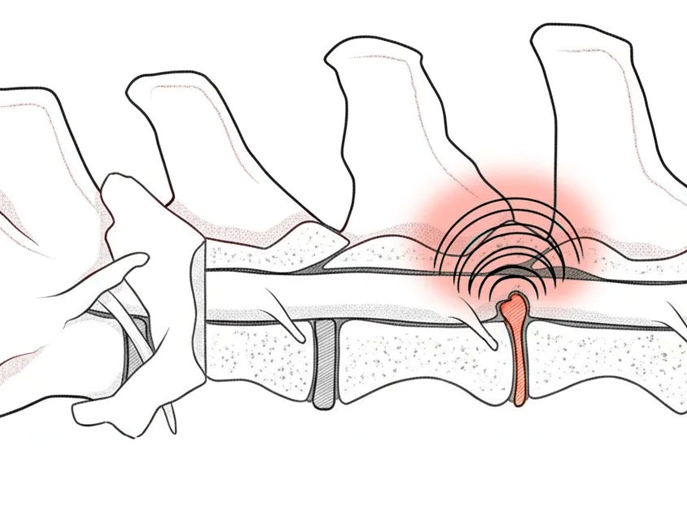
This affects the dog's upper arm, ulna and radius, shortening them, and causing varying degrees of bending of the latter bones. The mutation is also thought to be responsible for intervertebral disc degeneration (IVDD). It can cause the dog to have disc bulges, which often require surgery and sometimes even paralyze the dog. Disc bulges have been observed in Tibetan Terriers.
**CDPA = Chondrodysplasia (FGF4-18) - causes distinctly short legs.**
Causative gene: Attachment of the FGF4 retrogene to chromosome 18.
This mutation explains the short-legged phenotype. I have not observed this in Tibetan Terriers, which is why we will only go through CDDY in this section.
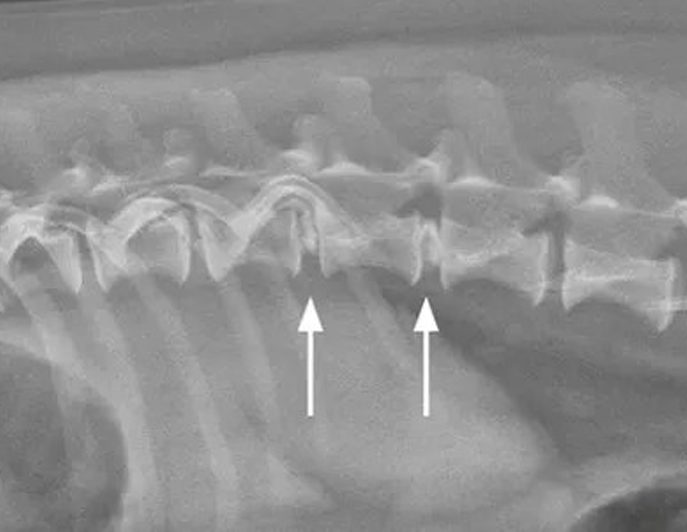
Studies show that dogs with two copies of the CDDY mutation have a much higher rate of disc calcification, with up to 91% of puppies having calcified discs if both parents have them, compared to 44% if only one parent has them.
| Clinical features of CDDY (via IVDD) |
- Back or Neck Pain:
Reluctance to move, stiffness, guarding behavior, or whining/yelping when touched or lifted (e.g., reluctance to jump or walk or to be pet; “laziness”; unusual aggression towards being touched; stiff neck or arched back) - Reduced Mobility:
Hesitation to jump, climb, or climb stairs. - Ataxia:
Incoordination, walking with a wobbly gait, or dragging the paws (knuckling). - Hind Limb Weakness or Paralysis:
Sudden or gradual onset of hind leg weakness (partial paralysis). - Neurological Issues:
Fecal or urinary incontinence. - Progressive:
While "old age" slowing might stabilize, DM will worsen, leading to paralysis within 6 to 12 months. - Reduced Life Expectancy:
Intervertebral Disc Disease (IVDD) in dogs does not automatically mean a reduced lifespan, but it can significantly impact a dog's quality of life and, in severe, untreated, or progressive cases, it can lead to euthanasia. Dogs that are paralyzed and lose deep pain sensation have a more guarded prognosis. While many recover with surgery, some may face permanent mobility issues or require long-term care for incontinence. IVDD can be diagnosed only with MRI or CT, which can be very expensive, and does not give guarantee for recovery.
Please note that symptoms and age-frames may also be of other types and may differ from those mentioned above. |
| Morbidity |
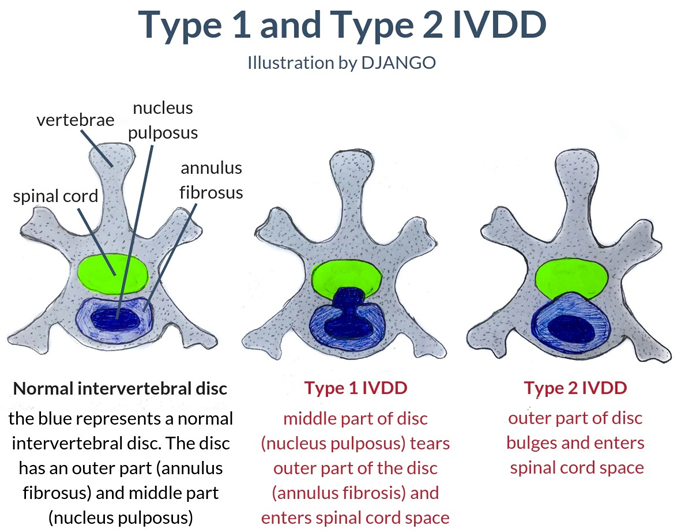
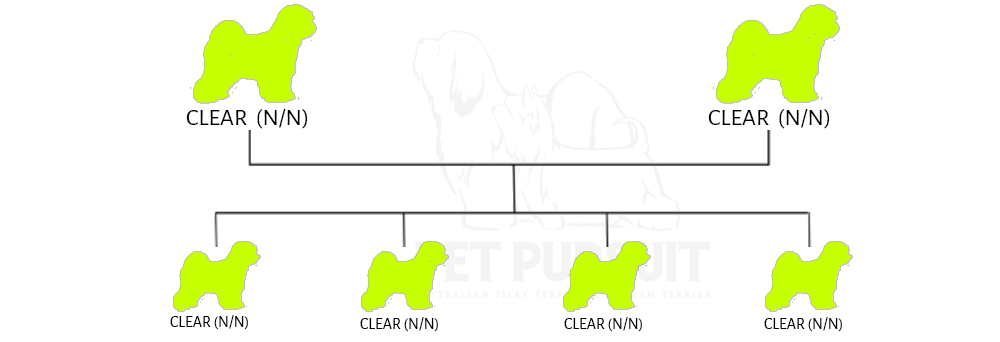
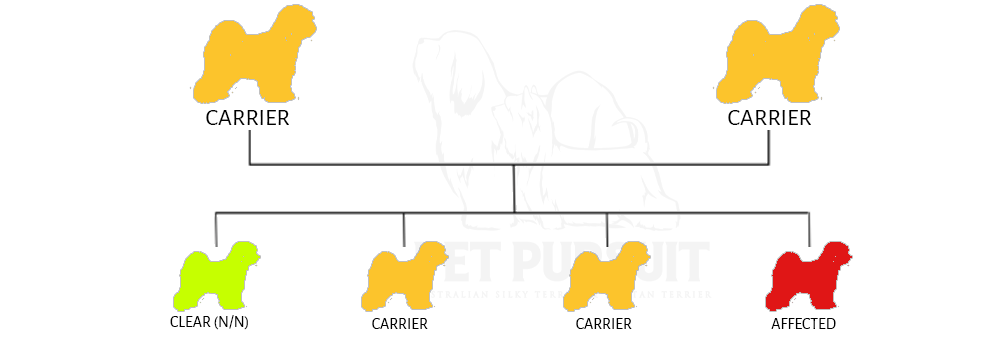
CLEAR / N/N  | CLEAR / N/N = A dog testing N/N for the chondrodystrophy (CDDY) genetic mutation is much less likely to develop the most common, severe form of Intervertebral Disc Disease (IVDD). However, a "clear" result does not guarantee a dog will never experience IVDD. While the CDDY (Chondrodystrophy) genetic test is a powerful tool to identify dogs at high risk for premature disc degeneration (Type I IVDD), it does not cover all causes of spinal disc disease. There are other Types of IVDD: The genetic test primarily identifies the risk for Type I IVDD, common in chondrodystrophic (short-legged) breeds. Dogs can still develop Hansen's Type II IVDD, which is a different, often age-related degenerative process that is not associated with this specific mutation. Yet IVDD is not solely determined by one gene; it is a complex,, multifactorial disease influenced by environment, lifestyle, and other genetic factors and also by severe trauma or consistent, long-term wear and tear (such as jumping off high furniture, running up/down stairs, or poor physical conditioning) can cause a disc to rupture even if the dog is not genetically predisposed to early, spontaneous calcification. |
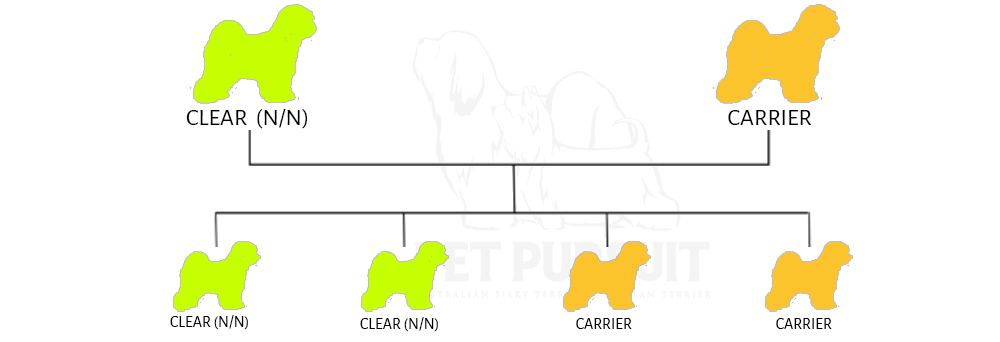
CARRIER / N/CDDY  | CARRIER / N/CDDY = Dogs with one copy of the mutation have a significantly higher risk (roughly 5 to 15 times) of developing IVDD compared to dogs with no copies, although they are less severely affected than those with two copies. |
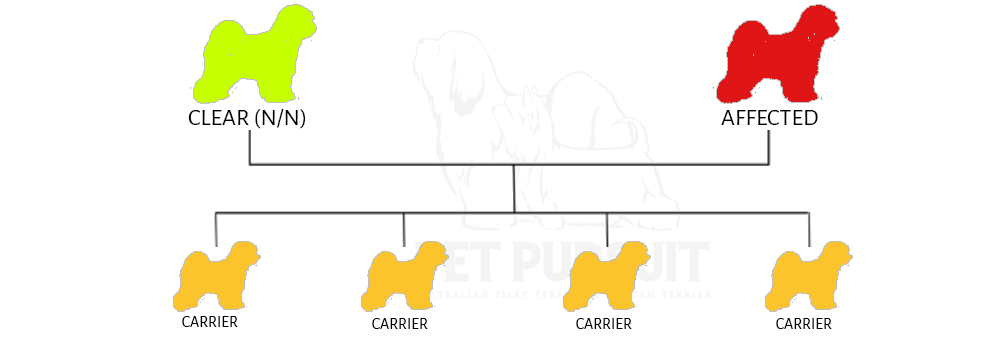
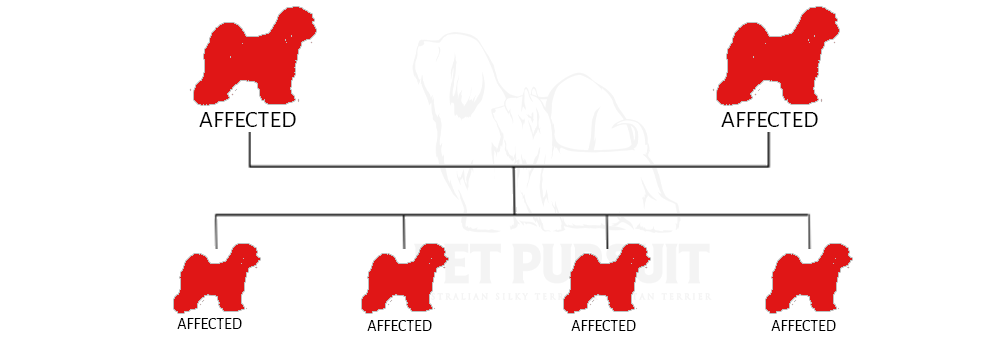
AFFECTED / CDDY/CDDY  | AFFECTED / CDDY/CDDY = Dogs with two copies of the mutation are at the highest risk for IVDD. |
© Pet Pursuit (www.petpursuit.net). Any use, sharing (public or private) or display is forbidden.