



DP-LHX3
Pituitary Dwarfism
| Name: | Pituitary Dwarfism – Shepherd Type |
|---|---|
| Gene Location: | LHX3 |
| Chromosome: | 9 |
| Mutation: | c.622-37-31del |
| Symptom Complex: | Systemic |
| Inheritance: | Autosomal recessive |
| Test type: | Direct mutation test |
| Typical onset age: | 6-12 weeks |
Note: these information are only valid for Tibetan Terriers.
| General Information |
|---|
Pituitary Dwarfism is a genetic disorder characterized by a severe lack of multiple pituitary hormones due to a defect in the LHX3 gene, which is essential for the proper development of the pituitary gland, motor neurons, and inner ear. It is characterized by a combined deficiency of growth hormone (GH), thyroid-stimulating hormone (TSH), prolactin, and gonadotropins. Due to this mutation, the pituitary glands of affected dogs fail to develop normally, leading to a deficiency of multiple hormones essential for growth and development. DP-LHX is 7-base pair (7-bp) deletion in intron 5 of the LHX3 gene. |
| Clinical features |
|---|
Please note that symptoms and age-frames may also be of other types and may differ from those mentioned above. |
| Morbidity | |||
|---|---|---|---|
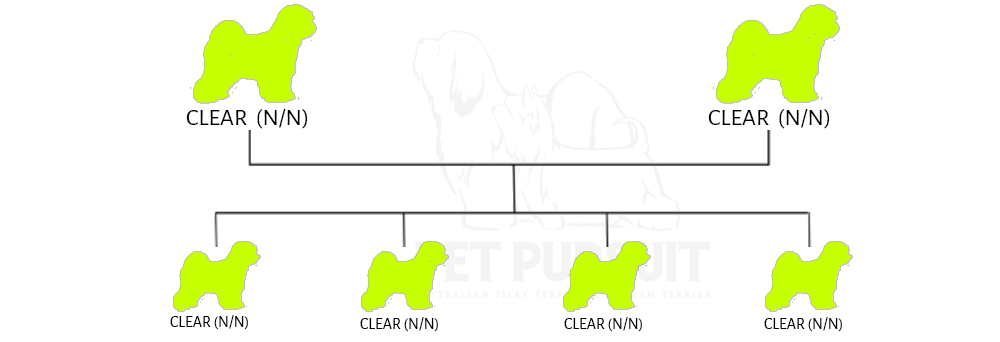
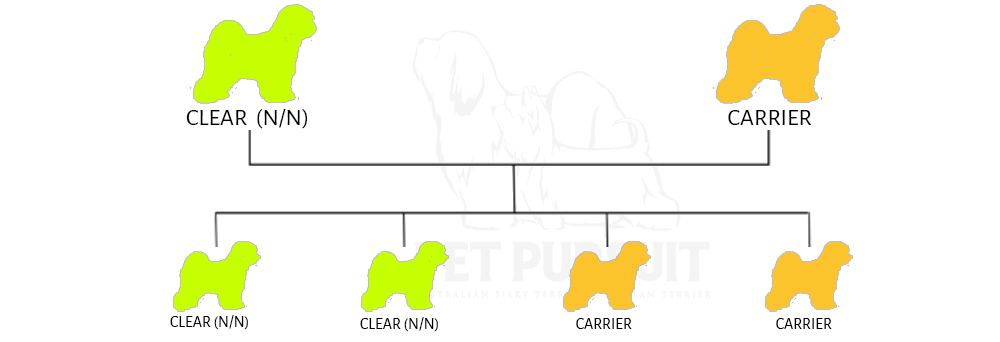
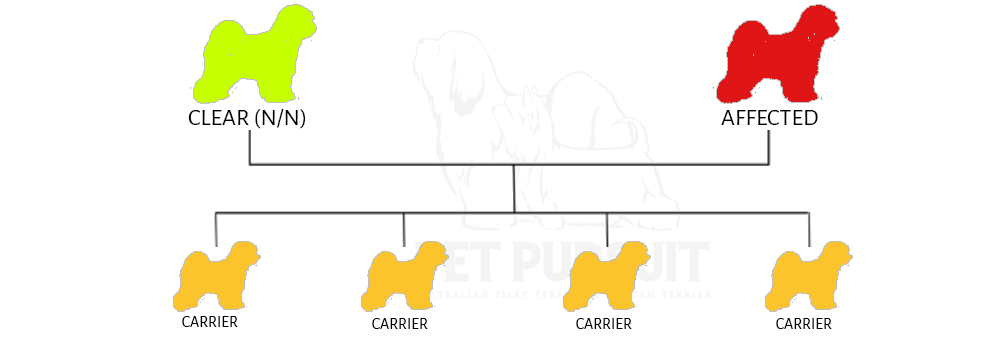
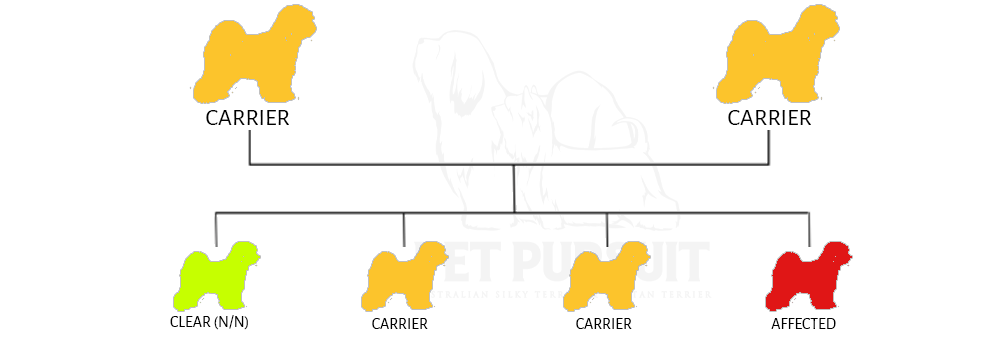
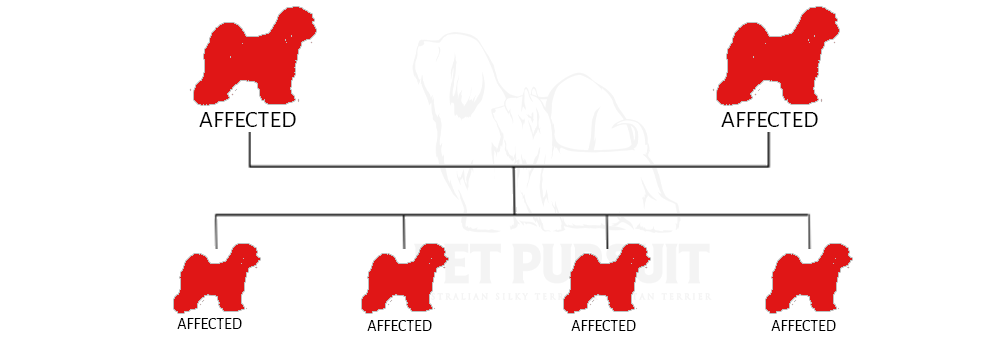
CLEAR / N/N  | CLEAR / N/N = Dogs with N/N genotype will not have this disease. | ||
CARRIER / N/DP-LHX3  | CARRIER / N/DP-LHX3 = Dogs with N/DP-LHX3 genotype are generally clinically healthy and do not develop the disease. | ||
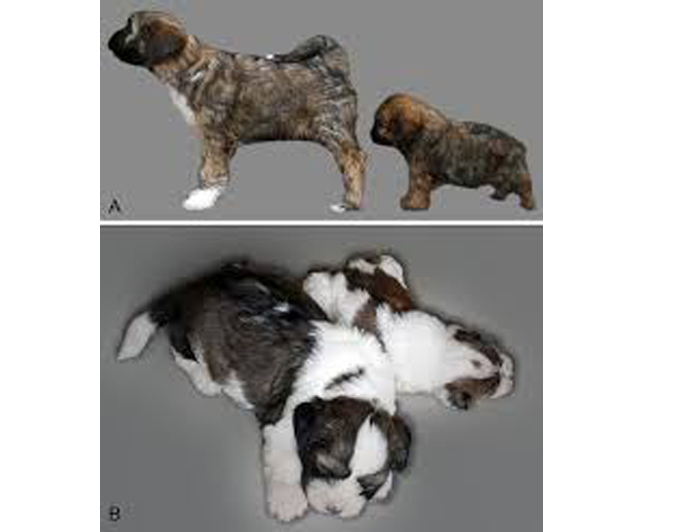
AFFECTED / DP-LHX3/DP-LHX3  | AFFECTED / DP-LHX3/DP-LHX3 = Dogs with DP-LHX3/DP-LHX3 dogs can appear normal at birth, but begin to exhibit clinical effects in short time. By 6 weeks, a notable difference in weight and height is typically observed, though full diagnostic signs may be more obvious closer to 8-12 weeks. | ||
| Inheritance | |
|---|---|
 |  |
 |  |
 | |
** © Pet Pursuit (www.petpursuit.net). Any use, sharing (public or private) or display is forbidden. **